Original article
Initial development and content validation of a comprehensive physical, psychosocial and skill related fitness scale in school going children / Desenvolvimento inicial e validação de conteúdo de uma escala abrangente de aptidão física, psicossocial e relacionada a habilidades em crianças em idade escolar
Kanu Goyal1 (https://orcid.org/0000-0002-6500-4403)
Subhasish Chatterjee2 (https://orcid.org/0000-0002-8919-8820)
1Maharishi Markandeshwar (Deemed to be University), Maharishi Markandeshwar Institute of Physiotherapy and Rehabilitation (Mullana). Haryana, India.
2Corresponding contact. Maharishi Markandeshwar (Deemed to be University), Maharishi Markandeshwar Institute of Physiotherapy and Rehabilitation (Mullana). Haryana, India. [email protected]
ABSTRACT | INTRODUCTION: Physical, psychosocial and skill-related fitness are the essential factors of overall fitness in children. Developing these components of fitness is crucial for overall health, well-being, and athletic potential. There are several scales to evaluate children's physical fitness. Also, psychosocial assessment scales are available for school-going children. To date, no scale is available to measure the combined physical, psychosocial and skill-related fitness in school-going children. OBJECTIVE: The purpose of the study was to generate items and domains related to physical, psychosocial and skill-related fitness in children and to validate the content by experts. METHODS: Items were generated through a reproducible, extensive literature search conducted between January 1990 and February 2025 across PubMed, Scopus, Cochrane Library and PEDro using predefined Boolean search combinations. All complete search strings and dates have been documented for transparency. 16 studies contributed to item extraction following eligibility screening. The Delphi process was conducted in two structured rounds with domain-specific expert panels (n=8, including paediatricians, sports physiotherapists, paediatric physiotherapists, psychologists and psychiatrists with ≥10 years of experience). Item-level content validity index (I-CVI≥ 0.78) and scale-level content validity index (S-CVI/Ave ≥ 0.90) were predefined as acceptance criteria. Primary outcome: achievement of acceptable I-CVI and S-CVI thresholds. Secondary outcome: quantitative refinement of items and domain structure. RESULTS: From 3300 identified records, 16 studies contributed to item extraction, 19 items were derived from literature and 12 from expert input (total = 31 items). After, two Delphi rounds 16 items were retained under physical skill domains (S-CVI=1) and 15 under psychosocial domain (S-CVI = 0.90) CONCLUSION: The comprehensive scale addressing physical, psychosocial and skill related fitness in school going children under the proposed domains, have been developed and content validated. These items are recommended for their use in the assessment of physical, psychosocial and skill related fitness in children.
KEYWORDS: Physical Fitness. Psychosocial Factors. Health. Child. Schools. Validation Study. Motor Skills. Surveys and Questionnaires. Delphi Technique.
Ensaio registrado no Registro de Ensaios Clínicos – Índia: CTRI/2025/06/088792.
RESUMO | INTRODUÇÃO: A aptidão física, psicossocial e relacionada a habilidades são fatores essenciais para a aptidão geral em crianças. Desenvolver esses componentes da aptidão é crucial para a saúde geral, bem-estar e potencial atlético. Existem várias escalas para avaliar a aptidão física em crianças. Além disso, escalas de avaliação psicossocial estão disponíveis para crianças em idade escolar. Até o momento, nenhuma escala está disponível para medir a aptidão física, psicossocial e relacionada a habilidades de forma combinada em crianças em idade escolar. OBJETIVO: O objetivo do estudo foi gerar itens e domínios relacionados à aptidão física, psicossocial e relacionada a habilidades em crianças e validar o conteúdo por especialistas. MÉTODOS: Os itens foram gerados por meio de uma extensa busca bibliográfica reproduzível realizada entre janeiro de 1990 e fevereiro de 2025 nas bases PubMed, Scopus, Cochrane Library e PEDro, usando combinações de busca Booleanas pré-definidas. Todas as strings de busca completas e datas foram documentadas para transparência. 16 estudos contribuíram para a extração de itens após a triagem de elegibilidade. O processo Delphi foi conduzido em duas rodadas estruturadas com painéis de especialistas específicos por domínio (n=8, incluindo pediatras, fisioterapeutas esportivos, fisioterapeutas pediátricos, psicólogos e psiquiatras com ≥10 anos de experiência). O índice de validade de conteúdo ao nível do item (I-CVI ≥ 0,78) e o índice de validade de conteúdo ao nível da escala (S-CVI/Ave ≥ 0,90) foram pré-definidos como critérios de aceitação. Desfecho primário: alcance de limiares aceitáveis de I-CVI e S-CVI. Desfecho secundário: refinamento quantitativo dos itens e da estrutura do domínio. RESULTADOS: De 3300 registros identificados, 16 estudos contribuíram para a extração de itens, 19 itens foram derivados da literatura e 12 da contribuição de especialistas (total = 31 itens). Após duas rodadas Delphi, 16 itens foram mantidos nos domínios de habilidades físicas (S-CVI = 1) e 15 no domínio psicossocial (S-CVI = 0,90). CONCLUSÃO: A escala abrangente aborda aptidão física, psicossocial e relacionada a habilidades em crianças em idade escolar, os domínios propostos foram desenvolvidos e validados quanto ao conteúdo. Esses itens são recomendados para seu uso na avaliação da aptidão física, psicossocial e relacionada a habilidades em crianças.
PALAVRAS-CHAVE: Aptidão Física. Fatores Psicossociais. Saúde. Criança. Escolas. Estudo de Validação. Habilidades Motoras. Pesquisas e Questionários. Técnica Delphi.
Trial registered on Clinical Trials Registry – India: CTRI/2025/06/088792.
How to cite this article: Goyal K, Chatterjee S. Initial development and content validation of a comprehensive physical, psychosocial and skill related fitness scale in school going children. J Physiother Res. 2026;16:e6605. https://doi.org/10.17267/2238-2704rpf.2026.e6605
Submitted Nov. 28, 2025, Accepted Mar. 31, 2026, Published May 25, 2026
J. Physiother. Res., Salvador, 2026;16:e6605
https://doi.org/10.17267/2238-2704rpf.2026.e6605
ISSN: 2238-2704
Assigned editor: Juliana Goulardins
1. Introduction
Physical fitness may be considered as a complex concept and is used as a general term for numerous skill- and associated with health abilities, such as endurance, strength, speed, or coordination1. Childhood fitness and physical exercise can have several long-term health advantages, including a lower risk of chronic diseases. Children who are physically fit seems to be less likely to grow up to be overweight or obese2.
A range of field-based assessments have been employed by investigators to assess many aspects of physical fitness in children in preschool and school, such as cardiovascular fitness, flexibility, muscular endurance, and coordination3,4.
Physical fitness assessments often include both field- and laboratory-based testing5. With many well-established physical fitness test batteries, including ALPHA-FIT6, EUROFIT7, and FITNESSGRAM8, currently being used globally9, the major problem with these scales were all these tools were constructed in European setting, and the Physical growth, BMI and mental growth is not same as compared to Indian children. Furthermore, children between the ages of 8 and 16 have their physical activity levels measured using validated self-report questionnaires like the Physical Activity Questionnaire for Older Children (PAQ-C)10.
Higher self-confidence and a more positive self-concept in children are linked to better physical fitness and regular physical exercise11. When children succeed in physical activities and gain new physical abilities, their sense of competence may improve12.
According to one study, older children (8–10) completed obstacle courses more quickly than younger kids (6-7 years old)13. Skills like coordination, speed, or the combination of the two—agility—are best developed at this age. In order to maintain and control body posture while changing direction, agility is a crucial aspect of motor development14.
Prior research revealed a significant favourable correlation between physical fitness and physical activity and youth mental and emotional well-being15. Children at the phallic stage may have psychological, biological, physical, or family issues in addition to psychosocial issues16. It is simpler to address psychological issues at the appropriate time when they are diagnosed early. Later in life, psychosocial issues may become more challenging to resolve and may give rise to distinct emotional and behavioural issues17. Because of their developmental traits, it is difficult to detect psychosocial issues in children. Consequently, it is imperative to have a measurement instrument that is both valid and reliable in order to evaluate the physical fitness and psychosocial status of children. This study is grounded in the biopsychosocial model of child development, conceptualising child fitness as an interaction between physical capacity, motor competence and psychosocial functioning. Therefore, the study aims to develop and perform initial development and content validation of a comprehensive multidomain scale. The lack of an integrated instrument represents a methodological and practical gap particularly in school health context where multi-dimensional assessment is essential.
1.1 Operational definitions
Physical fitness includes flexibility, muscular strength and cardiorespiratory endurance; Skill related fitness includes agility, balance, coordination and reaction time; Psychosocial fitness includes emotional regulation, academic perception, school adjustment and social interaction.
1.2 State of the art and rationale
Existing literature demonstrates associations between physical fitness and academic performance, mental health and social adjustment; however, assessments remain fragmented. Most instruments rely on traditional field based physical tests, while psychosocial tools are administered independently. Methodologically prior research lacks integrated validation frameworks combining physical performance test and psychosocial questionnaires within a single scale. Therefore, the present study addresses the methodological gap by initiating a structured content validation process to develop a unified multi-dimensional scale.
2.1 Protocol approval
The institutional research committee (IRC) accepted the study protocol in May 2024. On December 8, 2024, the Institutional Ethics Committee (IEC) reviewed and approved it (MM(DU)/IEC/3140). Following approval by the Institutional Ethics Committee (IEC) and Research Advisory Committee (RAC), the study protocol was registered in Clinical Trials Registry India, an open-access public domain, on April 5, 2025 (CTRI/2025/06/088792).
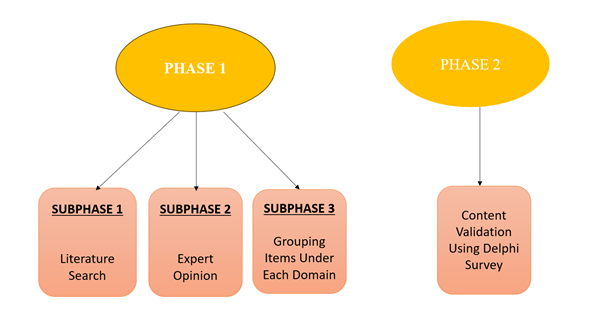
There are two primary stages of the study. Firstly, the creation of items about comprehensive physical, psychosocial and skill related fitness, and the grouping of the item pool into pertinent domains and secondly, the content validation of the obtained item pool. Three sub-phases make up the first phase, generation of an item pool by means of extensive literature search (ELS), and expert opinion, and classifying the procured item pool under the appropriate domains for physical, psychosocial and skill-related fitness. The initial phase of the study was qualitative, and its second phase validated the selected item pool using the Delphi survey method. The study was conducted under two phases including subphases describing step wise approach of development and validation procedure under each as delineated in figure 1.
Figure 1. Phases of the
study
2.2 Phase 1: domain and item generating
In this phase, the item pool related to physical, psychosocial and skill related fitness in school going children was generated using ELS and expert opinion method.
2.2.1 Sub-phase 1: literature search
The databases PubMed, SCOPUS, Cochrane Library, and PEDro were searched for ELS in the English language between January 1990 and February 2025. Additionally, a manually reviewed of the reference section of the filtered articles was conducted to ensure that no articles would be overlooked in an electronic search. During an electronic search, the primary author employed Boolean operators like "AND," "OR," and "NOT" in conjunction with the following medical subject headings (MeSH) terms: "physical," "psychosocial," "skill," "fitness," and "scale." This strategy was adapted appropriately for each database. Filters applied included English language. Additionally, manual screening of reference lists of included studies was performed to ensure completeness. All search strategies including database specific adaptation and search dates were documented to ensure transparency and reproducibility.
2.2.2 Sub-Phase 2: experts’ opinion
Experts in the relevant field with at least ten years of clinical experience—two physiotherapists, one psychiatrist, and one psychologist—were asked to report on the various tests related to flexibility, coordination, cardiorespiratory fitness, and questions about psychosocial aspects. This method was taken into consideration in order to cover as many items as possible under the categories of physical, psychosocial, and skill-related fitness. Certain items, were created specifically for this scale, debated with the experts, and added to the final draft of the scale when everyone agreed.
2.2.3 Sub-Phase 3: grouping items under each domain
Items developed with expert opinion and ELS were categorized under the designated domains. Initially, items that were closely associated with psychosocial characteristics, flexibility, cardiorespiratory, strength, agility, balance and coordination were found and categorized. The grouped items were then placed under the produced relevant domain. Every item was made sure to fall under one of the designated domains.
2.3 Phase 2: content validation using Delphi survey method
The generated items' content was validated using an online Delphi survey approach. In order to get an 80% consensus among the selected panel of eight experts, a two-round Delphi survey was conducted. Experts were selected using predefined eligibility criteria: who had ≥ 10 years of academic experience. In each round of the Delphi poll, these experts were Paediatricians, Sports physiotherapists, Psychologist and Psychiatrist, working with children from various parts of India. This study included a panel of eight experts within each Delphi survey. A google form contained generated items were emailed to the experts and the suggestions provided by the experts through google forms were recorded and analysed.
Round 1 of the Delphi survey was conducted in March 2025 and Round 2 was conducted in April 2025. The response rate recorded was 100% across the rounds. The Delphi method was conducted in two rounds under eight domains, specific experts per panel, following methodological recommendations for content validation. I-CVI≥0.78 and S-CVI/Ave≥0.90 were applied as acceptance thresholds.
As per the established criteria, 8-10 experts for content validation were sufficient18. In this second round of the Delphi survey, the committee of experts that took part in the previous round was not chosen. A separate two rounds of Delphi survey were conducted for the psychosocial domain with panel of eight Psychologist exclusively. For physical and skill related items panel of two paediatrician, four paediatric physiotherapist and two sports physiotherapist was used for the validation. A google form was created and the link of the form was sent to each expert with selected items under domains. The experts were directed to assess the items’ relevance using a four-point rating scale. 1=Not relevant, 2=Item need adjustment, 3=Item is significant but only requires minor change, and 4=Very relevant. During content validity analysis score 1 was assigned to the items got 3 or 4 on a relevance rating scale from experts, score 0 was assigned to the items got 1 and 2 on a relevance rating scale from experts.
The content validation index criteria state that each item on a scale must have a minimum Item level content validity index (I-CVI) of 0.78 for six to ten experts19. The experts choose the item pool based on its relevancy. Experts' input and remarks on the addition of new things that weren't previously included as scale validation were taken as well into account.
The scale-level content validation index (S-CVI) of the first round of the Delphi method of scale validation was less than the suggested level (SCVI/Ave = 0.90)20. As a result, the second round of the Delphi method of scale validation was conducted after the removal of individual items with a score of less than 0.78 (I-CVI)21.
3. Data Analysis
Every created item has been reported in terms of I-CVI and verified. Following the completion of each Delphi method of scale validation, the overall validation of the proposed scale with item pool has been reported using S-CVI. S-CVI (S-CVI/Ave) was calculated using the averaging calculation method. Lynn suggested that for a scale to be deemed to have outstanding content validity, it should have an overall SCVI/Ave of .90 or above and a minimum I-CVI of .78 for six to ten experts21.
4. Results
Extensive literature search resulted in total of 3300 articles. After the removal of duplicates (2,786), screening (514), excluded (396), assessed for eligibility (118) and non-relevant articles (98), 22 studies were included in qualitative synthesis. From 22 studies, 16 articles were included for the item pool and domain development. Total 19 items were identified by ELS and 12 new items by experts’ opinion resulted in total 31 items. These items were subjected to the first round of the Delphi survey in which 13 items achieved acceptable I-CVI values and were retained. In addition, the expert panel recommended the inclusion of three new items considered relevant to the construct. The overall scale level content validity index (S-CVI/Ave) for the first round was 0.95.
Although all initially included items met the pre-defined I-CVI and S-CVI thresholds the newly suggested items were incorporated into the scale and reassessed in the second Delphi round. Following this round all 16 items demonstrated satisfactory content validity resulting in an improved S-CVI/Ave of 1.
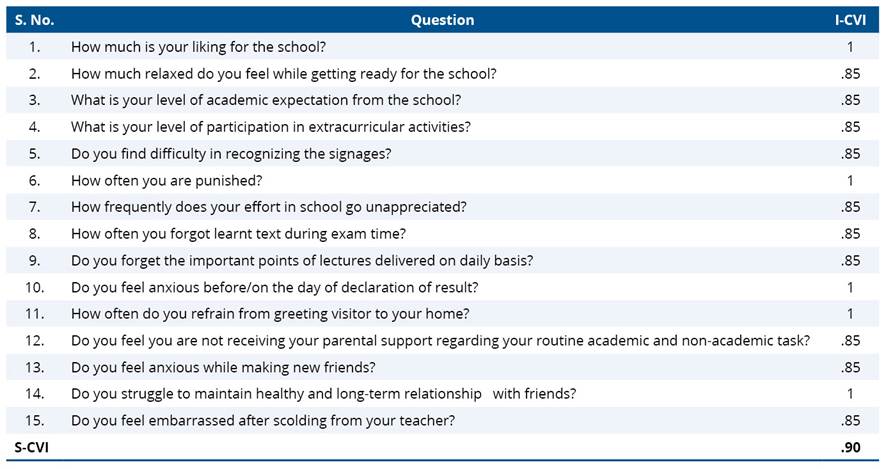
For the psychosocial domain an initial set of 19 items was evaluated in the first Delphi round yielding an S-CV/Ave of .85. However, four items did not meet the minimum I-CVI threshold and therefore removed. The remaining 15 items were carried forward to the second Delphi round where they achieved acceptable content validity resulting in a final S-CVI/Ave of 0.9.
Table 1 represents the details of item pool generated by extensive literature search with source of literature and expert opinion.
Thus, the content validation by a panel of experts resulted in 16 items under physical and skill related fitness assessment and 15 items under psychosocial assessment. The I-CVI for each item and domain are tabulated in table 3a, 3b, 4a and 4b.
Table 1. List of items generated and its source through extensive literature search and experts’ opinion
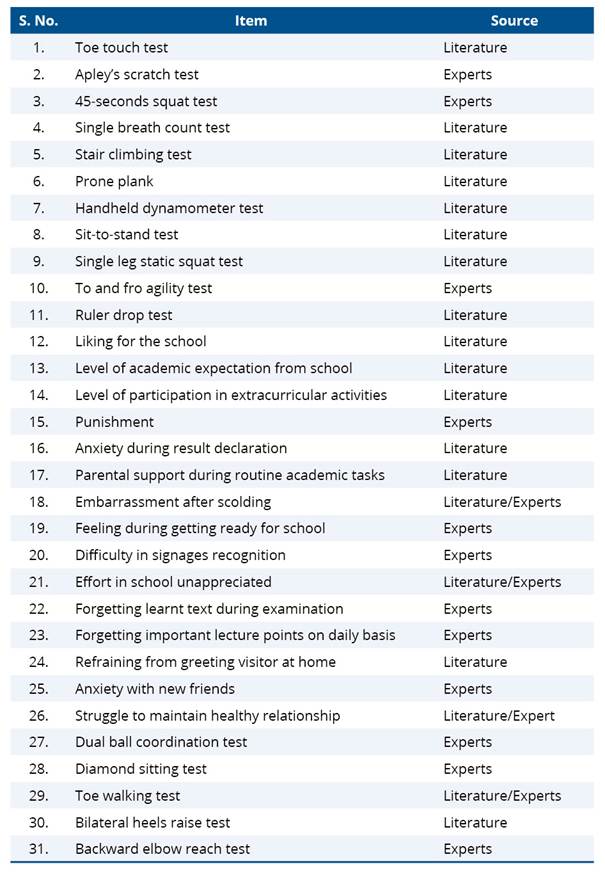
Table 1 represents a comprehensive list assessment item identified through an extensive review of existing literature and consultation with subject experts. Each item is categorized based on its primary source of generation indicating whether it was derived from literature, expert opinion or both.
Table 2. Domains and Items generated after grouping for physical and skill related fitness
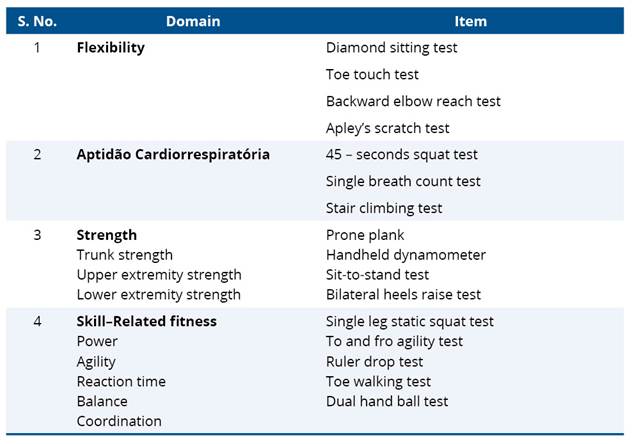
Table 2 represents a structured grouping of physical and skill related fitness domains along with specific assessment test under each category. For lower limb flexibility: diamond sitting test and toe touch test, for upper limb flexibility: elbow reach test and Apley’s scratch test. Cardio-respiratory fitness is assessed through 45 second squat test, single breath count test, stair climbing test; trunk strength is assessed through prone plank, upper extremity strength through hand held dynamometer and lower extremity strength through sit to stand test and bilateral heel raise test; skill related fitness is evaluated through single leg static squat test (power), to and fro agility test, ruler drop test (reaction time), toe walking test (balance) and dual hand ball test(coordination).
Table 3a. Physical and Skill related fitness domains, items generated and percentage level of agreement between experts in terms of item-level content validation index after first round Delphi survey
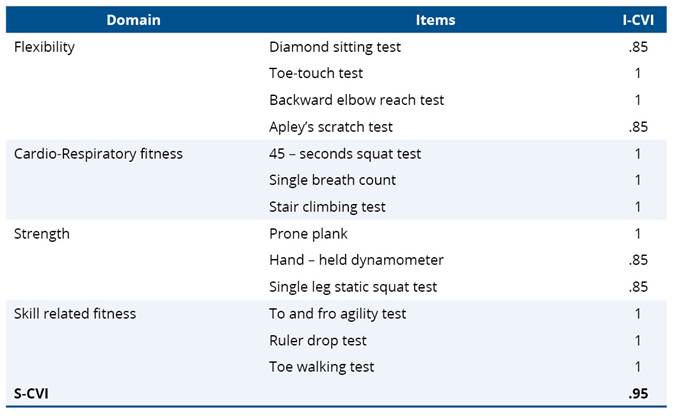
Table 3b. Psychosocial assessment questionnaire percentage level of agreement between experts in terms of item-level content validation index after first round Delphi survey
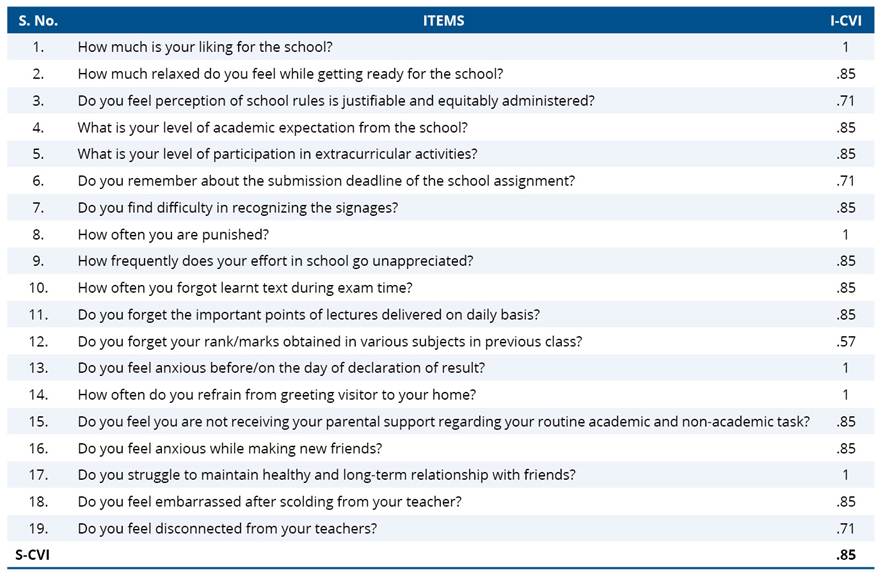
Table 4a. Physical and skill related fitness domains, items generated and percentage level of agreement between experts in terms of item-level content validation index after second round Delphi survey
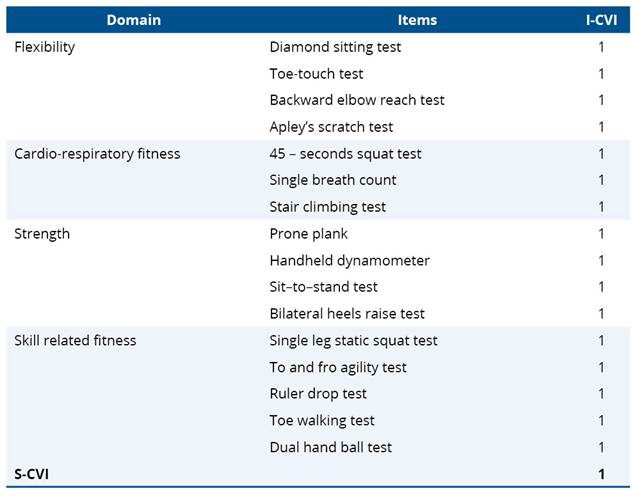
Table 4b. Psychosocial assessment questionnaire percentage level of agreement between experts in terms of item-level content validation index after second round Delphi survey
5. Discussion
The present study represents the first stage of instrument development, item generation and expert based content validation. Unlike, traditional physical fitness batteries such as alpha fit fitness gram etc. which assess psychological parameters alone, this scale integrates physical, motor and psychosocial domains. The inclusion of psychosocial constructs acknowledges evidence linking physical activity, self-efficacy, academic adjustment and emotional well-being22. The current study's results offer some first insight into the range of items needed in a scale that represents skill-related, psychological, and physical fitness. Previous research demonstrated the positive effects of physical activity or fitness on children's somatic growth, body composition, and health-related fitness23.
According to recent literature, children with higher levels of physical fitness and visual motor coordination perform better in school24. The psychosocial health is directly proportional to increase in physical fitness25. The inclusion of the psychosocial component in the current study as a measure is consistent with the findings of an earlier study that found an association between children's physical activity behaviour and self-efficacy26. Psychosocial self-report items, therefore, further may be influenced by social desirability bias and comprehension variability in children27; therefore, further reliability and construct validation testing are required.
This evaluation tool provides researchers with an organized method for more thorough fitness assessments and can be included in the various school health fitness policies.
5.1 Limitations
Currently, our scale is based on expert judgment relevance, which is content validity; however, it has not yet completed complete reliability and criteria validity in a large sample of children.
The psychosocial domain relies on child self-report, which may introduce social desirability and variability in semantic comprehension. Although an eight members panel aligns with methodological recommendations for content validation, expert-based studies inherently carry the risk of professional bias.
The scale was developed within the Indian educational context therefore cross-cultural validation is required before broader application.
5.2 Future research directions
Further research should include factor analysis to determine construct validity, and measurement of internal consistency, test re-test reliability, inter-rater reliability and against standardised instruments. Responsiveness testing following intervention programmes.
6. Conclusion
The comprehensive fitness assessment scale in context to physical, psychosocial and skill related components under the proposed domains have been developed and content validated. These items are recommended for their use in the assessment and development of an innovative comprehensive fitness assessment scale in school children. This study describes the initial development, content validation of a multidimensional fitness assessment scale integrating physical, skill related and Psychosocial domains in school going children. As the strong content validity was established as S-CVI up to 1, which is essential before clinical or large-scale implementation.
Use of Artificial Intelligence
No artificial intelligence (AI) tools were used in the conceptualization, data analysis or scientific writing of this manuscript.
Acknowledgement
The authors are very grateful to Dr. Riya Kalra, MPT, (Ph.D. Pursuing), Research Scholar, Maharishi Markandeshwar Institute of Physiotherapy and Rehabilitation, Maharishi Markandeshwar (Deemed-to-be-University), Mullana - Haryana, India, for providing logistic and technical support in content editing. This study forms a part of Ph.D. theses by the first author.
Authors’ contributions
The authors declared that they have made substantial contributions to the work in terms of the conception or design of the research; the acquisition, analysis or interpretation of data for the work; and the writing or critical review for relevant intellectual content. All authors approved the final version to be published and agreed to take public responsibility for all aspects of the study.
Competing interests
No financial, legal, or political conflicts involving third parties (government, private companies, and foundations, etc.) were declared for any aspect of the submitted work (including but not limited to grants and funding, advisory board participation, study design, manuscript preparation, statistical analysis, etc.).
Indexers
The Journal of Physiotherapy Research is indexed by DOAJ, EBSCO, LILACS and Scopus.
References
1. Utesch T, Dreiskämper D, Strauss B, Naul R. The development of the physical fitness construct across childhood. Scand J Med Sci Sports. 2018;28(1):212-9. https://doi.org/10.1111/sms.12889
2. Ruedl G, Niedermeier M, Wimmer L, Ploner V, Pocecco E, Cocca A, et al. Impact of parental education and physical activity on the long-term development of the physical fitness of primary school children: An observational study. Int J Environ Res Public Health. 2021;18(16):8736. https://doi.org/10.3390/ijerph18168736
3. Ke D, Maimaitijiang R, Shen S, Kishi H, Kurokawa Y, Suzuki K. Field-based physical fitness assessment in preschool children: A scoping review. Front Pediatr. 2022;10:939442. https://doi.org/10.3389/fped.2022.939442
4. Zhao R, Li X, Wang J, Zhang L, Gao Z. Evaluation of physical fitness and health of young children aged between 3 and 6 based on cluster and factor analyses. BMC Public Health. 2024;24(1):420. https://doi.org/10.1186/s12889-024-17660-5
5. Pate RR, Daniels S. Institute of Medicine report on fitness measures and health outcomes in youth. JAMA Pediatr. 2013;167(3):221-2. https://doi.org/10.1001/jamapediatrics.2013.1464
6. Ruiz JR, Castro-Piñero J, España-Romero V, Artero EG, Ortega FB, Cuenca MM, et al. Field-based fitness assessment in young people: The ALPHA health-related fitness test battery for children and adolescents. Brit J Sport Med. 2010;45:518–24. https://doi.org/10.1136/bjsm.2010.075341
7. Popović R, Aleksić A, Stojanović D, Stefanović M, Božić S, Popović M. Evaluation of the physical fitness level in physical education female students using “eurofit-test”. Int J Sports Sci Phys Educ. 2017;2(1):1-5. https://doi.org/10.11648/j.ijsspe.20170201.11
8. Eastham SL. Physical fitness test administration practices and students’ cognitive understanding of physical fitness. The Physical Educator. 2018;75(3):374-93. https://doi.org/10.18666/TPE-2018-V75-I3-7933
9. Marques A, Henriques-Neto D, Peralta M, Martins J, Gomes F, Popovic S, et al. Field-based health-related physical fitness tests in children and adolescents: a systematic review. Front Pediatr. 2021;9:640028. https://doi.org/10.3389/fped.2021.640028
10. Kowalski KC, Crocker PR, Donen RM. The physical activity questionnaire for older children (PAQ-C) and adolescents (PAQ-A) manual. College of kinesiology, University of Saskatchewan [Internet]. 2004;87(1):1–38. Available from: https://web.archive.org/web/20130524222640id_/http://www.dapa-toolkit.mrc.ac.uk/documents/en/PAQ/PAQ_manual.pdf
11. Nieman P. Psychosocial aspects of physical activity. Pediatr child health. 2002;7(5):309-12. https://doi.org/10.1093/pch/7.5.309
12. Livingstone MBE, Robson PJ, Wallace JMW, McKinley MC. How active are we? Levels of routine physical activity in children and adults. Proc Nutr Soc. 2003;62(3):681-701. https://doi.org/10.1079/PNS2003291
13. Sugimoto D, Stracciolini A, Berbert L, Nohelty E, Kobelski GP, Parmeter B, et al. Assessment of physical tests in 6–11 years old children: Findings from the Play Lifestyle and Activity in Youth (PLAY) study. Int J Environ Res Public Health. 2023;20(3):2552. https://doi.org/10.3390/ijerph20032552
14. Sopa IS, Pomohaci M. Study regarding the development of agility skills of students aged between 10 and 12 years old. Timişoara Physical Education and Rehabilitation Journal [Internet]. 2016;9(17):7-16. Available from: https://scispace.com/pdf/study-regarding-the-development-of-agility-skills-of-x9ivhp8kqd.pdf
15. Shah S, Diwan S. Assessment of Physical Fitness among School Children Aged between 11 and 14 Years in Surat City: A Cross-sectional Evaluation. Indian Journal of Medical Specialities. 2024;15(3):169-74. https://doi.org/10.4103/injms.injms_179_23
16. Kupfersmid J. Freud's Clinical Theories Then and Now. Psychodyn Psychiatry. 2019;47(1):81-97. https://doi.org/10.1521/pdps.2019.47.1.81
17. Gautam S, Jain A, Chaudhary J, Gautam M, Gaur M, Grover S. Concept of mental health and mental well-being, it's determinants and coping strategies. Indian J Psychiatry. 2024;66(Suppl2):S231-44. https://doi.org/10.4103/indianjpsychiatry.indianjpsychiatry_707_23
18. Yusoff MSB. ABC of content validation and content validity index calculation. Education in medicine journal. 2019;11(2):49-54. https://doi.org/10.21315/eimj2019.11.2.6
19. Aksah H, Ani AIC, Johar S, Husain SH. Evaluating the Content Validity: Development of An Instrument for Measuring Functional Building Performance. International Journal of Global Optimization and Its Application. 2023;2(1):12-19. https://doi.org/10.56225/ijgoia.v2i1.161
20. Said NAM, Bujang SM, Buang NA, Siraj@Ramli HH, Besar MNA. Critical thinking transfer practice instrument: a content validity calculation steps based on expert panel evaluation. Education in Medicine Journal. 2022;14(3):61–74. https://doi.org/10.21315/eimj2022.14.3.5
21. Polit DF, Beck CT. The content validity index: are you sure you know what's being reported? Critique and recommendations. Res Nurs Health. 2006;29(5):489-97. https://doi.org/10.1002/nur.20147
22. Yubin Y, Dev RDO, Geok SK, XueYan J. Enhancing exercise adherence through self-efficacy: mechanisms, moderators, and interventions. Int J Acad Res Bus Social Sci. 2025;15(3):1713-22. http://dx.doi.org/10.6007/IJARBSS/v15-i3/25122
23. Reisberg K, Riso EM, Jürimäe J. Physical Fitness in Children during Growth: Associations with Body Composition, Physical Activity, and Cognitive Skills. In: Souza AA, Bezerra TA, Souza-Filha A, Silva SS. Updates on Physical Fitness in Children. London: IntechOpen; 2023. https://doi.org/10.5772/intechopen.1003787
24. Korcz A, Bojkowski Ł, Bronikowski M, Łopatka M, Khorkova M, Koszałka-Silska A, et al. Cluster analysis of physical activity and physical fitness and their associations with components of school skills in children aged 8–9 years. Sci Rep. 2025;15(1):5053. https://doi.org/10.1038/s41598-025-88359-9
25. LaCaille R, Marshall E. Psychosocial benefits and aspects of physical activity. In: Gellman MD. Encyclopedia of Behavioral Medicine. Switzerland: Springer Cham; 2020. p. 1786-94. https://doi.org/10.1007/978-3-030-39903-0_1617
26. Zhang G, Feng W, Zhao L, Zhao X, Li T. The association between physical activity, self-efficacy, stress self-management and mental health among adolescents. Sci Rep. 2024;14(1):5488. https://doi.org/10.1038/s41598-024-56149-4
27. Camerini AL, Schulz PJ. Social desirability bias in child-report social well-being: Evaluation of the children’s social desirability short scale using item response theory and examination of its impact on self-report family and peer relationships. Child Ind Res. 2018;11(4):1159-74. https://doi.org/10.1007/s12187-017-9472-9
