Original article
Francisco Valter Miranda Silva1 (https://orcid.org/0009-0001-9647-3464)
Ana Valeska Siebra e Silva2 (https://orcid.org/0000-0003-3664-5073)
Amanda de Oliveira Toledo3 (https://orcid.org/0000-0002-4104-5825)
Shamyr Sulyvan de Castro4 (https://orcid.org/0000-0002-2661-7899)
Daniela Gardano Bucharles Mont'Alverne5 (https://orcid.org/0000-0002-9739-6878)
Lanna Rafaela do Nascimento Macedo6 (https://orcid.org/0009-0006-3887-7440)
Paula Pessoa de Brito Nunes7 (https://orcid.org/0000-0002-7462-0494)
Ana Paula Vasconcellos Abdon8 (https://orcid.org/0000-0002-1597-1817)
1Corresponding contact. Universidade Estadual do Ceará (Fortaleza). Ceará, Brazil. [email protected]
2Universidade Estadual do Ceará (Fortaleza). Ceará, Brazil.
4,5Universidade Federal do Ceará (Fortaleza). Ceará, Brazil.
3,6-8Universidade de Fortaleza (Fortaleza). Ceará, Brazil.
ABSTRACT | BACKGROUND: Despite the increase in studies on chronic back pain, there is still limited research that simultaneously evaluates different vertebral regions from a biopsychosocial perspective in university students, and an integrated approach is needed to guide preventive strategies in this population. OBJECTIVE: To analyze the prevalence of chronic pain in different regions of the spine and its association with biopsychosocial factors in university students. METHODS: This is a cross-sectional and analytical research with 358 university students, including adults (18 and 59 years old), regardless of gender, enrolled in undergraduate courses in the areas of health and technology of two higher education institutions in the Northeast of Brazil, and the data were collected through an online questionnaire containing instruments: socioeconomic questionnaire, general health assessment, lifestyle, Self-Report Questionnaire, Nordic Musculoskeletal Questionnaire, International Physical Activity Questionnaire and Pittsburgh Sleep Quality Index. Statistical analysis was performed using Pearson's chi-square test and logistic regression using the stepwise forward method. RESULTS: The participants had a mean age of 22 years (±4.5), and 57.5% were female. The prevalence of neck pain was 69.0%, higher than lumbar pain (55.3%). Chronic neck pain was associated with suspected common mental disorder (CMD) (OR=2.38; p=0.001), and low back pain with CMD (OR=1.66; p=0.038) and being physically active (OR=2.08; p=0.017). CONCLUSION: There is a high prevalence of chronic back pain, especially in the cervical region. Back pain was significantly associated with psychosocial factors and higher levels of physical activity, emphasizing the importance of addressing these factors in preventive interventions.
KEYWORDS: Neck Pain. Low Back Pain. Chronic Pain. Models, Biopsychosocial. Cross-Sectional Studies.
RESUMO | FUNDAMENTOS: Apesar do aumento dos estudos sobre dor crônica na coluna, ainda são limitadas as pesquisas que avaliam simultaneamente diferentes regiões vertebrais sob uma perspectiva biopsicossocial em estudantes universitários, sendo necessária uma abordagem integrada para orientar estratégias preventivas nessa população. OBJETIVO: Analisar a prevalência de dor crônica em diferentes regiões da coluna e associação com fatores biopsicossociais em universitários. MÉTODOS: Trata-se de uma pesquisa transversal e analítica com 358 universitários, foram inclusos adultos (18 e 59 anos), independente do gênero, matriculados nos cursos de graduação das áreas de saúde e tecnologia de duas instituições de ensino superior no Nordeste do Brasil, sendo os dados coletados por meio de questionário online contendo instrumentos: questionário socioeconômico, avaliação geral de saúde, estilo de vida, Self-Report Questionnaire, Nordic Musculoskeletal Questionnaire, International Physical Activity Questionnaire e Pittsburgh Sleep Quality Index. Na análise estatística aplicou-se o teste de Qui-quadrado de Pearson e regressão logística pelo método stepwise forward. RESULTADOS: Os participantes tinham média de idade de 22 anos (±4,5), sendo 57,5% do sexo feminino. A prevalência de dor cervical foi de 69,0%, superior à lombar (55,3%). A dor cervical crônica apresentou associação com suspeita de transtorno mental comum (CMD) (OR = 2,38; p = 0,001), e a dor lombar com TMC (OR = 1,66; p = 0,038) e ser fisicamente ativo (OR = 2,08; p = 0,017). CONCLUSÃO: Há elevada prevalência de dor crônica na coluna, principalmente na região cervical. A dor na coluna esteve significativamente associada a fatores psicossociais e maior nível de atividade física, enfatizando a importância de abordar esses fatores em intervenções preventivas.
PALAVRAS-CHAVE: Cervicalgia. Dor Lombar. Dor Crônica. Modelos Biopsicossociais. Estudos Transversais.
How to cite this article: Silva FVM, Silva AVS, Toledo AO, Castro SS, Mont'Alverne DGB, Macedo LRN, et al. Prevalence of chronic pain in different regions of the spine and association with biopsychosocial factors in university students: a cross-sectional study. J Physiother Res. 2026;16:e6508. https://doi.org/10.17267/2238-2704rpf.2026.e6508
Submitted Oct. 13, 2025, Accepted Feb. 27, 2026, Published Apr. 16, 2026
J. Physiother. Res., Salvador, 2026;16:e6508
https://doi.org/10.17267/2238-2704rpf.2026.e6508
ISSN: 2238-2704
Assigned editor: Bruno Goes
1. Introduction
Chronic back pain in the lumbar and cervical regions is a highly prevalent condition with a significant impact on both quality of life and healthcare systems1. It is characterized by its persistence and a complex individual experience, influenced by biological, psychological, and social factors2. This condition can result in functional impairment, increased economic burden due to high healthcare costs, and high rates of absenteeism3.
Globally, neck pain affects more than 30% of the population, with a rate of 2,450 cases per 100,000 inhabitants, varying between countries and regions4. Lower back pain affects more than 619 million people globally, with projections indicating an increase to over 200 million cases by 20505. In Brazil, the prevalence of chronic spinal pain is 21.6%, with a tendency to increase with age, being more frequent in adults between 25 and 44 years old6. Although this complaint is predominant in this age group, in recent years there has been a significant increase in the prevalence of neck and lower back pain among university students7. This increase is associated with several factors, such as maintaining a seated position for long periods and excessive use of electronic devices8.
Scientific evidence considers these factors risky for the persistence and increased incidence of spinal pain in this population. Furthermore, poor sleep quality, physical inactivity, and psychological issues, including anxiety and depression, contribute to the development and increased perception of pain. Sleep deprivation emerges as a significant risk factor for the development and exacerbation of cervical and lumbar pain, demonstrating a bidirectional relationship with the presence of chronic pain. This occurs due to the increased release of inflammatory cytokines, which, in turn, sensitize nociceptors, intensifying pain perception9.
Psychological factors also exert a significant influence on this process, since high levels of stress, anxiety, and depression are associated with greater functional disability, poorer academic performance, and a greater impact of pain on daily life7. The interaction between these factors can lead to hypervigilance regarding pain, intensifying its perception and hindering the individual's adaptation to the painful condition. This process can result in greater dysfunction, limitations in daily activities, and a significant impact on the quality of life of university students2.
Physical inactivity, in turn, can be related to the presence of pain due to compromised spinal stability, resulting in discomfort and pain in these areas. Decreased muscle capacity, along with the absence of the release of endogenous substances that modulate pain perception, intensifies the pain and impairs the functionality of students10.
Despite the growing number of studies investigating chronic pain in the cervical and lumbar regions, significant limitations remain in understanding the simultaneous influence of multiple health factors on the occurrence of these conditions in university students9. Existing literature has largely analyzed specific spinal regions or isolated risk factors, hindering an understanding of the multifactorial nature of musculoskeletal pain in this population. Recent studies indicate that university students have high exposure to factors potentially associated with pain, including prolonged sitting, prolonged use of electronic devices, high cognitive demands, academic stress, and altered sleep patterns—conditions that may act interdependently in the development and maintenance of chronic pain7.
Furthermore, there is a scarcity of research that simultaneously assesses different regions of the spine from an integrated biopsychosocial perspective, considering both physical, behavioral, and psychological factors. This limitation reduces the ability to identify more comprehensive risk profiles and restricts the development of preventive strategies targeted at the specific needs of young adults in academic settings11,12.
Given this scenario, it becomes relevant to investigate in an integrated way the prevalence of chronic pain in different regions of the spine and its association with biopsychosocial factors in university students, a population in transition to adulthood and particularly vulnerable to lifestyle changes and academic overload13. By broadening the understanding of the determinants associated with musculoskeletal pain in this group, the present study seeks to contribute to strengthening the evidence base necessary for planning preventive interventions and actions to promote physical and mental health in the university environment.
Therefore, the objective was to analyze the prevalence of chronic pain in different regions of the spine and its association with biopsychosocial factors in university students.
2. Methods
This is an analytical cross-sectional study, derived from a broader research project entitled "Smartphone use and associated factors among university students after strict social distancing during the Covid-19 pandemic". The research was conducted at two leading higher education institutions (HEIs) located in the city of Fortaleza, in the state of Ceará, Brazil, one private and one public. This study was approved by the Research Ethics Committee on Human Beings of the participating institutions, with opinions nº 5.526.758 and nº 5.739.427, and all participants gave their consent by signing the Informed Consent Form (ICF). Data collection took place between September and December 2022.
The study population
consisted of undergraduate students from the Health Sciences Center (CCS) and
the Science and Technology Center (CCT) of the aforementioned institutions. The
sample size calculation was based on the formula 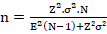 for cross-sectional
studies14, considering a finite population (N) of 12,677 university
students enrolled in 2021 at the CCS and CCT of the institutions, a standard
deviation (σ) of 3.2 h for the smartphone usage time variable, a
margin of error (E) of 20 min (0.33 h)15, and a 95% confidence
interval. Inclusion criteria were: ages between 18 and 59 years, regardless of
gender, enrolled in one of the selected centers of the two participating
institutions. Students who were absent from classes due to sick leave or course
withdrawal were excluded, as were university students with visual impairments
due to the inadaptability of the data collection instrument used in the study.
for cross-sectional
studies14, considering a finite population (N) of 12,677 university
students enrolled in 2021 at the CCS and CCT of the institutions, a standard
deviation (σ) of 3.2 h for the smartphone usage time variable, a
margin of error (E) of 20 min (0.33 h)15, and a 95% confidence
interval. Inclusion criteria were: ages between 18 and 59 years, regardless of
gender, enrolled in one of the selected centers of the two participating
institutions. Students who were absent from classes due to sick leave or course
withdrawal were excluded, as were university students with visual impairments
due to the inadaptability of the data collection instrument used in the study.
Recruitment was conducted through direct and personal invitations to university students at the selected institutions, by a properly trained data collection team. After an initial screening to verify inclusion and exclusion criteria, the objectives, risks, and benefits of the research were explained. Finally, the university student was asked if they were interested in participating in the research, and if so, invited to access an electronic form via a QR code. The average time to complete the survey was approximately 30 minutes.
Data collection was carried out by completing an instrument developed in the Google Forms application. The online form included, on its first page, an invitation that recapped all the guidelines provided by the team responsible for data collection, regarding the research, along with access to the Informed Consent Form.
The online form contained the following instruments: socioeconomic questionnaire, general health assessment, lifestyle assessment, Self-Report Questionnaire (SRQ-20), Nordic Musculoskeletal Questionnaire (NMQ), International Physical Activity Questionnaire (IPAQ) and Pittsburgh Sleep Quality Index (PSQI-BR).
The first instrument covered sociodemographic data (such as age, gender, self-declared race, social class, institution of study, and area of graduation), general health assessment, and lifestyle (smoking and alcohol consumption). The SRQ-20, Brazilian version, was used to investigate the suspicion of Common Mental Disorder (CMD). It has 20 dichotomous questions, and the score is obtained by summing the responses. In this study, the cutoff point adopted for suspected CMD was eight, regardless of sex, and is based on other studies in Brazil16.
The presence of musculoskeletal pain was assessed using the NMQ, a questionnaire adapted and cross-culturally validated that presents a human figure divided into nine anatomical regions: cervical, shoulders, thoracic, elbows, wrists/hands, lumbar, hips/thighs, knees, and ankles/feet. The instrument uses binary choices for each area, asking respondents if they had experienced pain in the last twelve months and seven days17. The Visual Analogue Scale (VAS) was used in conjunction with the NMQ to measure pain intensity on a scale of 0 to 1018. In the present study, only information regarding cervical and lumbar pain in the last 12 months was analyzed, which characterizes chronic pain according to the new pain classification defined by the International Association for the Study of Pain (IASP)2.
Physical activity levels and sedentary behavior were assessed using the IPAQ, validated for use in Brazil, whose short version contains eight open-ended questions that estimate the weekly time spent on physical activities and sitting time. Participants were initially classified as active (>150 min/week), irregularly active (10–150 min/week), or sedentary (<10 min/week), and subsequently categorized as active and inactive (irregularly active and sedentary), in addition to calculating the mean and standard deviation of sitting time19–21. Sleep quality was assessed using the PSQI-BR, an instrument validated for Portuguese consisting of 19 self-administered questions, with a total score ranging from 0 to 21 points, where values ≤5 indicate good sleep quality and >5 indicate poor sleep quality22.
To reduce potential biases, recruitment across different academic courses and shifts was adopted, along with the use of validated instruments and the application of an anonymous electronic questionnaire, minimizing selection and information biases, as well as possible responses influenced by constraint. Potential confounding factors were controlled by including theoretically relevant variables9 and with p<0.20 in the multiple logistic regression models.
Statistical analysis was performed using IBM® SPSS Statistics software, version 23.0. Initially, the distribution of numerical variables was assessed using the Kolmogorov–Smirnov (KS) normality test. Variables with a normal distribution were described as mean ± standard deviation (SD), while categorical variables were presented as absolute (n) and relative (%) frequencies. For comparison between means, the Student’s t-test for independent samples was applied, as per the previously verified normality assumption.
Chi-square test was used to investigate the association between the outcomes of chronic neck pain and chronic low back pain (in the last 12 months) and the socioeconomic, lifestyle, mental health, and sleep quality variables. Effect measures were estimated using odds ratios. Crude ratio (OR) and respective 95% confidence intervals (95% CI), calculated from the coefficients obtained in the simple binary logistic regression models.
Variables with a p-value<0.20 in the bivariate analysis, as well as those considered relevant based on theoretical plausibility (sex and age), were included as candidates in the multiple logistic regression models. The final model was constructed using the stepwise forward method, with progressive inclusion of variables according to statistical significance and contribution to fit models. The results were expressed as odds. Adjusted ratios (OR) and their respective 95% confidence intervals (CI) were obtained by exponentiating the β coefficients of the logistic regression. The fit and quality of the models were evaluated using the Hosmer–Lemeshow test, the Nagelkerke pseudo-R² coefficient of determination, and the overall accuracy of the predictive classification. A statistical significance level of 5% (p<0.05) was adopted.
3. Results
The average age was 22 years (±4.5), with higher proportions of women (57.5%; n=26), brown skin color (46.9%; n=168), social class D (33%; n=118), and those not engaged in paid activity (62.3%; n=223). It was found that 39.9% (n=143) reported poor self-assessment of health, 84.9% (n=304) were classified as physically active, and only 9.8% (n=35) smoked. However, 45.8% (n=164) consumed alcoholic beverages, 53.9% (n=193) presented suspected Common Mental Disorder (CMD), and 69.6% (n=249) presented poor sleep quality (Table 1).
Regarding chronic back pain, the highest prevalence was in the cervical region (69.0%; n=247) compared to the lumbar region (55.3%; n=198). However, despite the higher prevalence in the cervical region, the average pain intensity was higher in the lumbar region at 4.6 (± 2.6). Furthermore, complaints of pain in both the cervical and lumbar regions simultaneously were reported by 44.1% of university students (Table 1).
Table 1. Demographic characteristics, prevalence of chronic back pain, and biopsychosocial factors of university students. Fortaleza, Ceará, Brazil, 2022
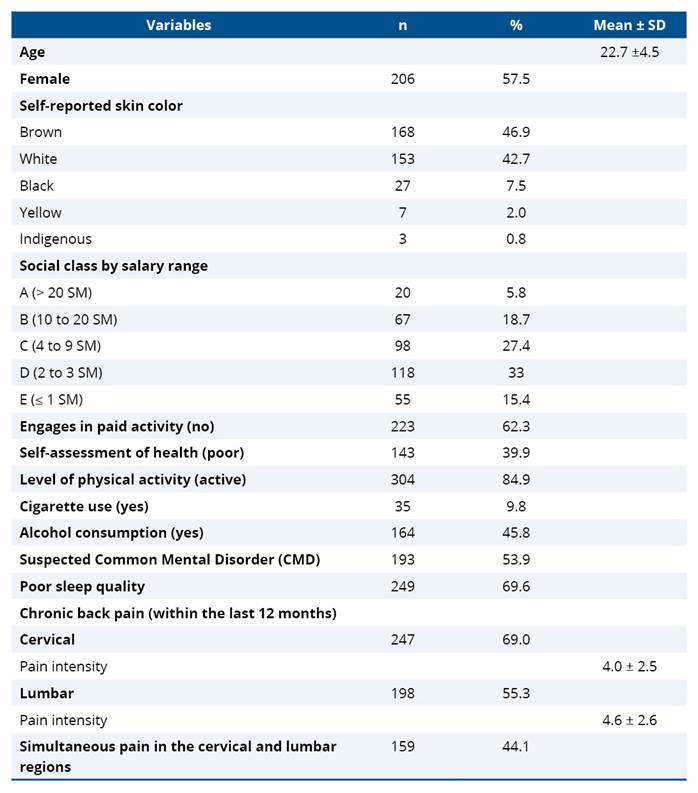
n = absolute frequency; % = percentage; SD = standard deviation. SM = minimum wage.
Minimum wage in 2022 = R$ 1,212.00.
In the bivariate analysis, using simple binary logistic regression between neck pain and health factors of university students, a significant association was observed between sex and neck pain, with women showing a higher prevalence (64.8%; n=160) compared to men (35.2%; n=87) (OR=2.59; p<0.001). Furthermore, self-rated health was significantly associated with neck pain, with a higher prevalence among students who reported poor health (45.7%) (OR=2.27; p<0.001). Similarly, the presence of suspected CMD (OR=2.88; p<0.001) and poor sleep quality (OR=2.19; p=0.001) were also associated with neck pain (Table 2).
Table 2. Relationship between prevalence of chronic neck pain and biopsychosocial factors among university students. Fortaleza, Ceará, Brazil, 2022
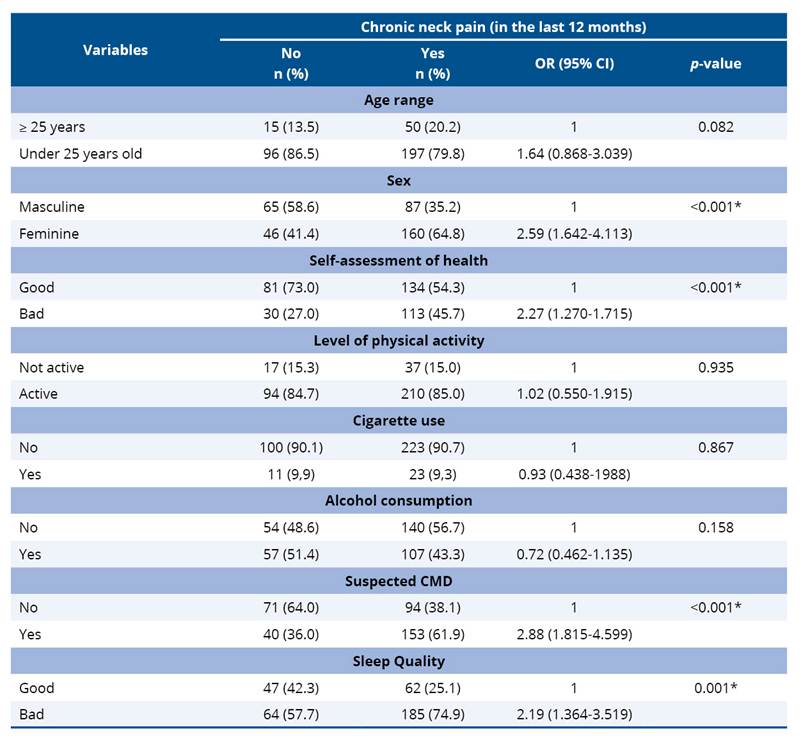
n = absolute frequency; % = percentage; OR = odds ratio. 95% Confidence Interval = 95% Confidence Interval; *p<0.05, obtained by Pearson's Chi-square test; OR estimated by simple binary logistic regression.
Regarding low back pain, a higher prevalence was observed in adults under 25 years of age (82.2%, n=164). However, no statistically significant differences were found compared to those who did not present with low back pain. Similarly, no significant differences were observed in relation to health perception, alcohol consumption, cigarette use, and sleep quality (p>0.05). A significant association was found between low back pain and being physically active, as well as suspected chronic musculoskeletal disorders (p<0.05), compared to those who did not present with these conditions (Table 3).
Table 3. Relationship between prevalence of chronic low back pain and biopsychosocial factors among university students. Fortaleza, Ceará, Brazil, 2022
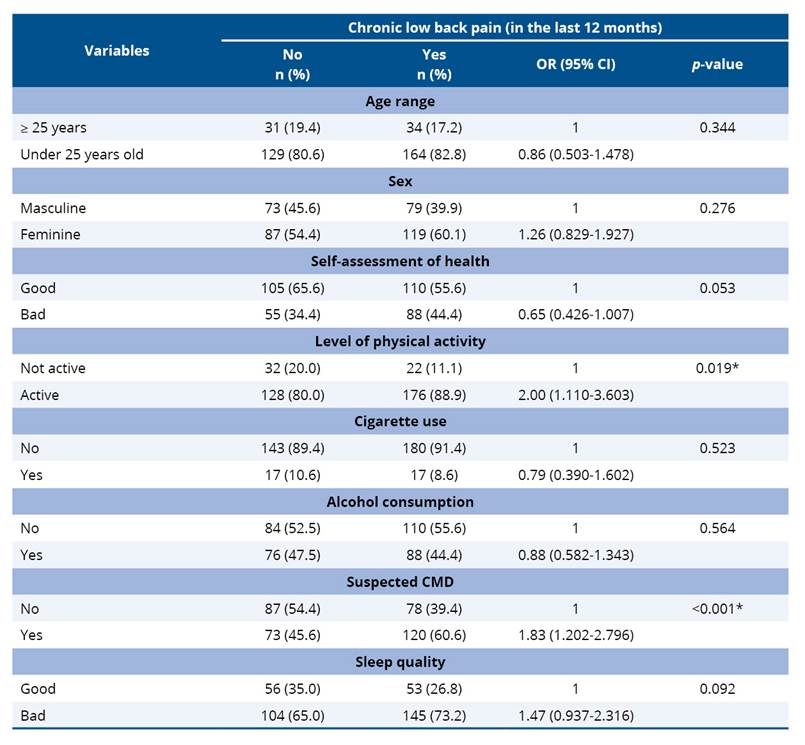
n = absolute frequency; % = percentage; OR = odds ratio. 95% Confidence Interval = 95% Confidence Interval; *p<0.05 obtained by Pearson's Chi-square test; OR estimated by simple binary logistic regression.
In the bivariate analysis, it was observed that simultaneous pain in the cervical and lumbar regions was significantly associated with female sex (OR=1.55; p=0.042), poor self-rated health (OR=1.56; p=0.050), being physically active (OR=1.90; p=0.039), suspected CMD (OR=2.45; p=<0.001) and poor sleep quality (OR=1.86; p=0.011) (Table 4).
Table 4. Relationship between prevalence of simultaneous pain in the cervical and lumbar regions and biopsychosocial factors of university students. Fortaleza, Ceará, Brazil, 2022
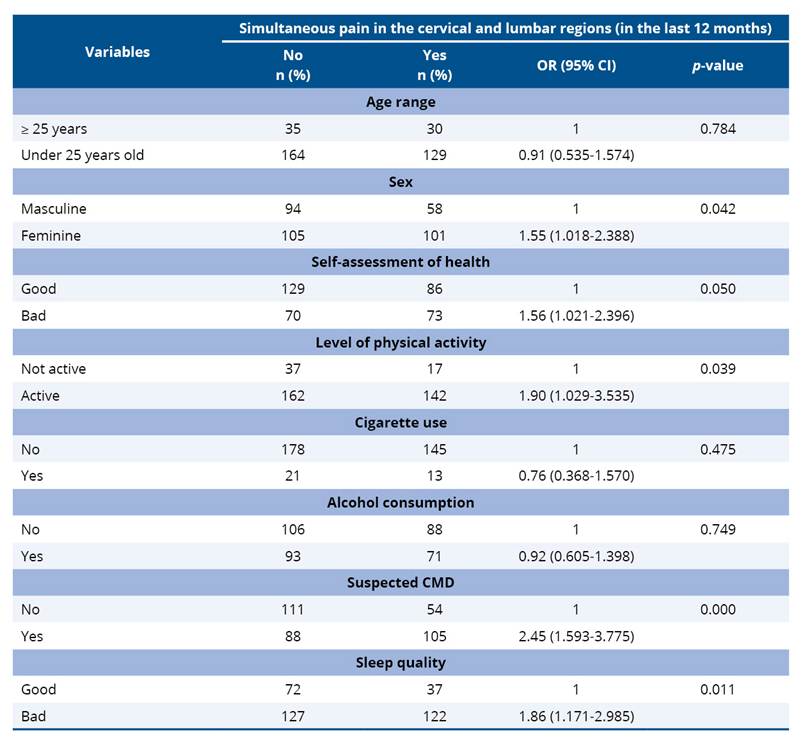
n = absolute frequency; % = percentage; OR = odds ratio. 95% Confidence Interval = 95% Confidence Interval; *p<0.05, obtained by Pearson's Chi-square test; OR estimated by simple binary logistic regression.
In the multiple logistic regression analysis for chronic neck pain, it was observed that female university students and those with suspected chronic musculoskeletal disorders (CMD) had twice the occurrence of chronic neck pain (OR=2.25 and OR=2.38; p=<0.001, respectively). The other variables analyzed—self-assessment of health, alcohol consumption, and sleep quality—did not show a significant association with the outcome (p>0.05). For chronic low back pain, suspected CMD remained associated with the outcome (OR=1.66; p=0.038). Furthermore, students classified as physically active had a higher prevalence of chronic low back pain (OR=2.08; p=0.017). Regarding simultaneous pain in the cervical and lumbar regions, being physically active showed a significant association, indicating twice the chance of reporting simultaneous cervical and lumbar pain (OR=2.04; p=0.028). Furthermore, suspected CMD showed a strong association (OR=2.45; p=<0.001), suggesting a significantly elevated risk for the occurrence of concomitant pain (Table 5).
Table 5. Multiple logistic regression analysis of chronic neck and low back pain with biopsychosocial factors in university students. Fortaleza, Ceará, Brazil, 2022
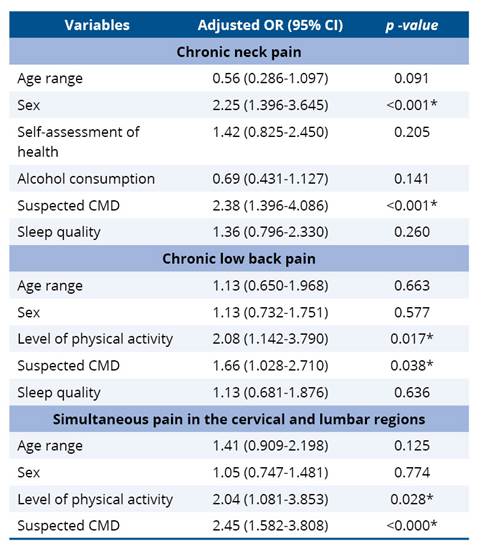
OR = odds ratio. 95% Confidence Interval = 95% Confidence Interval; *p<0.05, logistic regression. Model quality: cervical: Hosmer-Lemeshow = 0.355, Nagelkerke R² = 0.162 and accuracy = 72.6%; lumbar: Hosmer-Lemeshow = 0.919, Nagelkerke R² = 0.058 and accuracy of 58.4%.
4. Discussion
This study identified a high prevalence of chronic pain in the cervical and lumbar regions among university students, with a higher frequency of cervical pain compared to lumbar pain and a significant occurrence of multisite pain. An association was observed between cervical pain and female sex, suspected common mental disorder, and poor sleep quality, while lumbar pain was associated with suspected common mental disorder and level of physical activity. These findings reinforce the influence of biopsychosocial factors on the experience of musculoskeletal pain in young adults in the academic context.
Our results corroborate the evidence described in the international literature. Studies conducted in Brazil23 and in countries such as Italy24, the United Arab Emirates25, and Poland26 point to a predominance of this condition among women, possibly due to structural, hormonal, and emotional factors, which are frequently more prevalent in this population and considered risk factors for the development of neck pain4,25,26. This information highlights the need to direct policies and proposals for preventive interventions and health promotion primarily among women, considering chronic spinal pain.
The prevalence of chronic neck pain was 69.0%, while chronic low back pain had a prevalence of 55.3%. Furthermore, 44.1% of university students reported simultaneous pain in the cervical and lumbar regions, highlighting a high occurrence of multi-site pain in this population. These findings are consistent with studies describing a high frequency of musculoskeletal symptoms in university students, possibly attributed to academic demands and behavioral habits characteristic of this group, such as long periods of sitting and frequent use of electronic devices27. The high proportion of concomitant pain in both spinal regions reinforces the importance of healthcare approaches that consider the presence of multiple painful sites, rather than the isolated analysis of each anatomical region.
Studies suggest that the cervical region has a greater potential for chronicity due to its anatomical complexity and frequent associated psychosocial involvement, increasing the risks of persistent pain and the development of secondary symptoms, such as tension headaches and compensatory postural changes28. Another important aspect evidenced in the literature is that individuals with cervical pain are more likely to present with multisite pain, possibly due to the biomechanical interrelationships between different regions of the body, further aggravating the pain28. In addition, the presence of cervical pain frequently coexists with other musculoskeletal conditions and mental health disorders29.
From this perspective, a significant association was found between neck pain, suspected Common Mental Disorder (CMD), and poor sleep quality. This complex interaction between physiological and psychosocial aspects reinforces previous findings, which indicate that individuals with CMD may present with dysfunctions in sleep regulation and greater sensitivity to pain. Simultaneously, poor sleep quality can intensify both pain and psycho-emotional symptoms30–32.
In the university setting, academic stress, represented by excessive demands, short deadlines, and constant assessments, has been identified as a significant factor. This situation fosters emotional changes, such as anxiety and depressed mood, which not only intensify the perception of pain but also contribute to a decline in sleep quality, establishing a feedback loop between stress, sleep, and pain33.
Regarding lower back pain, although no significant association was observed with sleep quality or sex, a relationship was found with CMD and physical activity level. A higher intensity of pain was also noted in the lumbar region, although the overall perception was moderate in both locations. These findings reiterate the role of psychological factors in the maintenance of musculoskeletal pain, even in young and healthy populations34.
In the present study, physically active university students showed a greater chance of this outcome, possibly due to inadequate or unsupervised practices, which may have generated mechanical overload. Although physical activity is recognized as beneficial to musculoskeletal health, its relationship with low back pain is complex and may follow a U-shaped pattern, in which both low and high levels of activity increase the risk of chronic low back pain35. Thus, it is observed that both sedentary lifestyles and excessive and unregulated exercise represent risks to spinal health36. In this sense, physical activity should be analyzed not only in terms of frequency, but also in terms of quality, intensity, and suitability to individual needs37.
Based on the findings, this research is believed to make a significant contribution to understanding the prevalence of cervical and lumbar spine pain among university students, highlighting associations with psychosocial factors such as CMD and level of physical activity. By integrating multiple health factors, this study reinforces the relevance of a biopsychosocial approach in the assessment and management of musculoskeletal pain in young populations, which are frequently neglected in public health policies38. Furthermore, the results obtained can support the development of institutional strategies aimed at promoting mental and physical health in the academic environment, signaling the need for health education programs.
Furthermore, limitations in this study are acknowledged, particularly regarding the sample size, such as data collection from university students in only two fields (health and technology) and the lack of adaptability of instruments for visually impaired individuals. These limitations hinder the generalization of the results to the studied population. The use of a self-administered electronic questionnaire may have introduced self-reporting biases, such as potential memory errors and differing interpretations of the questions. However, the results of this study encourage and contribute to the discussion of the topic.
5. Conclusion
It was found that chronic pain in the cervical and lumbar spine regions, occurring simultaneously, has a high prevalence among university students, being more pronounced in the cervical region and with greater intensity in the lumbar region. The presence of chronic spinal pain was significantly associated with psychosocial factors, such as suspected chronic musculoskeletal disorders (CMD) in the lumbar and cervical regions, as well as a higher level of physical activity in the lumbar region. These findings reinforce the multifactorial complexity of pain, highlighting the importance of integrated approaches for its prevention and management.
The study also highlights the need for special attention to the physical and mental health of the university population. Therefore, it recommends the implementation of health promotion actions in the academic environment, involving psychological support and encouragement of appropriate physical activity, in order to reduce the burden of morbidity associated with back pain.
Authors' contributions
The authors declared that they made substantial contributions to the work in terms of the conception or design of the research; the acquisition, analysis, or interpretation of data for the work; and the writing or critical revision of relevant intellectual content. All authors approved the final version to be published and agreed to assume public responsibility for all aspects of the study.
Competing interests
No financial, legal, or political conflicts involving third parties (government, private companies and foundations , etc. ) have been declared for any aspect of the submitted work (including, but not limited to, grants and funding, participation on advisory boards, study design, manuscript preparation, statistical analysis, etc. ).
Indexers
The Journal of Physiotherapy Research is indexed in DOAJ, EBSCO, LILACS, and Scopus.
References
1. Williamson TJ, Bolles CL, Hedges NA, Kettner NW. Chronic Primary Pain the Spine: an Integrative Perspective Part 2. SN Compr Clin Med. 2021;3:473–89. https://doi.org/10.1007/s42399-021-00779-6
2. DeSantana JM, Perissinotti DMN, Oliveira Junior JO, Correia LMF, Oliveira CM, Fonseca PRB. Definition of pain revised after four decades. BrJP. 2020;3(3):197–8. https://doi.org/10.5935/2595-0118.20200191
3. Farley T, Stokke J, Goyal K, DeMicco R. Chronic Low Back Pain: History, Symptoms, Pain Mechanisms, and Treatment. Life. 2024;14(7):812. https://doi.org/10.3390/life14070812
4. Wu AM, Cross M, Elliott JM, Culbreth GT, Cousin E, Haile LM, et al. Global, regional, and national burden of neck pain, 1990–2020, and projections to 2050: a systematic analysis of the Global Burden of Disease Study 2021. Lancet Rheumatol. 2024;6:e142–55. https://doi.org/10.1016/S2665-9913(23)00321-1
5. Ferreira ML, Luca K, Haile LM, Steinmetz JD, Culbreth GT, Cross M, et al. Global, regional, and national burden of low back pain, 1990–2020, its attributable risk factors, and projections to 2050: a systematic analysis of the Global Burden of Disease Study 2021. Lancet Rheumatol. 2023;5:e316–29. https://doi.org/10.1016/S2665-9913(23)00098-X
6. Malta DC, Bernal RTI, Ribeiro EG, Ferreira EMR, Pinto RZ, Pereira CA. Chronic back pain among Brazilian adults: data from the 2019 National Health Survey. Rev Bras Epidemiol. 2022;25:e220032. https://doi.org/10.1590/1980-549720220032.2
7. Amorim A, Ribeiro FKPG, Santos JA, Brito JR, Resende MA, Farinha RCM, et al. Prevalence and associated factors with neck and low back pain in undergraduate students in a Brazilian University during the Covid-19 pandemic. REAS. 2023;23(8):e13499. https://doi.org/10.25248/reas.e13499.2023
8. Nakshine VS, Thute P, Khatib MN, Sarkar B. Increased Screen Time as a Cause of Declining Physical, Psychological Health, and Sleep Patterns: A Literary Review. Cureus. 2022;14(10):e30051. https://doi.org/10.7759/cureus.30051
9. Fernández-García R, Melguizo -Ibáñez E, Hernández-Padilla JM, Alonso-Vargas JM. Analysis of Physical Activity on Mental Hyperactivity, Sleep Quality, and Bodily Pain in Higher Education Students—A Structural Equation Model. Healthcare. 2024;2(18):1841. https://doi.org/10.3390/healthcare12181841
10. Campbell A, Wang D, Martin K, Côté P. The one-week prevalence of neck pain and low back pain in post-secondary students at two Canadian institutions. Chiropr Man Therap. 2023;31:23. https://doi.org/10.1186/s12998-023-00496-y
11. Dunn M, Rushton AB, Mistry J, Soundy A, Heneghan NR. The biopsychosocial factors associated with development of chronic musculoskeletal pain. An umbrella review and meta-analysis of observational systematic reviews. PLoS One. 2024;19:e0294830. https://doi.org/10.1371/journal.pone.0294830
12. Riska H, Karppinen J, Heikkala E, Villberg J, Hautala AJ. Gender-stratified analysis of psychosocial factors and physical function in higher education students with musculoskeletal pain. Eur J Physiother. 2025;27(4):230–6. https://doi.org/10.1080/21679169.2024.2386358
13. Castro DM, Pardo PM, Morata MM, Soto AAC, Castillo-Aguilar M, Mabe-Castro M, et al. Chronic Pain in University Students: Biopsychosocial Factors and their Functional Impact. Rev Investig Innov Cienc Salud. 2025;7(2):1–19. https://doi.org/10.46634/riics.465
14. Martins GA, Domingues O. Estatística geral e aplicada: revisada e ampliada. 3rd ed. São Paulo: Atlas Editora; 2010.
15. Callou Filho CR. Impacto do smartphone na disfunção musculoesquelética do pescoço em adultos [tese de doutorado] [Internet]. Fortaleza: Universidade de Fortaleza; 2021. Available from: https://biblioteca.sophia.com.br/terminalri/9575/acervo/detalhe/127447
16. Moraes RSM, Silva DAS, Oliveira WF, Peres MA. Social inequities in the prevalence of common mental disorders in adults: A population-based study in Southern Brazil. Rev Bras Epidemiol. 2017;20(1):43–56. https://doi.org/10.1590/1980-5497201700010004
17. Pinheiro FA, Tróccoli BT, Carvalho CV. Validity of the Nordic Musculoskeletal Questionnaire as morbidity measurement tool. Rev Saúde Pública. 2002;36(3):307–12. https://doi.org/10.1590/S0034-89102002000300008
18. Martinez JE, Grassi DC, Marques LG. Analysis of the applicability of diff erent pain questionnaires in three hospital settings: outpatient clinic, ward and emergency unit. Rev Bras Rheumatol. 2011;51(4):304–8. https://doi.org/10.1590/s0482-50042011000400002
19. Matsudo S, Araújo T, Matsudo V, Andrade D, Andrade E, Oliveira LC, et al. International physical activity questionnaire (IPAQ): study of validity and reliability in Brazil. Rev Bras Ativ Fís Saúde [Internet]. 2001;6(2):5–18. Available from: https://periodicos.ufpel.edu.br/index.php/RBAFS/article/view/931
20. Guedes DP, Lopes CC, Guedes JERP. Reproducibility and validity of the International Physical Activity Questionnaire in adolescents. Rev Bras Med Esporte. 2005;11(2):151–8. https://doi.org/10.1590/S1517-86922005000200011
21. Franco DC, Farias GS, Pelegrini A, Virtuoso Junior JS, Sousa TF. Validity of measure of sitting time of IPAQ Questionnaire short version in undergraduate from Brazil. Rev Bras Ativ Fís Saúde. 2021;26:e0223. https://doi.org/10.12820/rbafs.26e0223
22. Bertolazi AN, Fagondes SC, Hoff LS, Dartora EG, Miozzo ICS, Barba MEF, et al. Validation of the Brazilian Portuguese version of the Pittsburgh Sleep Quality Index. Sleep Med. 2011;12(1):70–5. https://doi.org/10.1016/j.sleep.2010.04.020
23. Oliveira SM, Santos SO, Gouveia SSV. Musculoskeletal complaints and stress levels related to the lifestyle habits of university students during the pandemic. Res Soc Dev. 2022;11(5):e5641152828375. http://dx.doi.org/10.33448/rsd-v11i5.28375
24. Roggio F, Trovato B, Ravalli S, Rosa M, Maugeri G, Bianco A, et al. One year of COVID-19 pandemic in Italy: Effect of sedentary behavior on physical activity levels and musculoskeletal pain among university students. Int J Environ Res Public Health. 2021;18(16):8680. https://doi.org/10.3390/ijerph18168680
25. Mohamed AM, Abbara MA, Bashier SA, Elkhidir DA, Hussein A, Ranade AV. Neck pain and distance learning: A pain in the neck for university students during COVID-19. F1000Research. 2024;13:307. https://doi.org/10.12688/f1000research.145874.1
26. Gałczyk M, Zalewska A, Sobolewski M. Assessment of Dyspnoea, Physical Activity, and Back Pain Levels in Students at Medical Universities after the COVID-19 Pandemic in Poland. J Pers Med. 2023;13(10):1474. https://doi.org/10.3390/jpm13101474
27. Preeti, Duhan M, Ruchi, Sonam, Bisla N. Exploring the Relationship between Prolonged Mobile Use, Sedentary Behavior, and Neck Pain in Students. Int J Health Sci Res. 2025;15(4):255-62. https://doi.org/10.52403/ijhsr.20250437
28. Huerta MA, Salazar A, Moral-Munoz JA. Trends in chronic neck and low back pain prevalence in Spain (2006–2020): differences by sex, age, and social class. Eur Spine J. 2025;34:1331–40. https://doi.org/10.1007/s00586-025-08676-5
29. Ge L, Pereira MJ, Yap CW, Heng BH. Chronic low back pain and its impact on physical function, mental health, and health-related quality of life: a cross-sectional study in Singapore. Sci Rep. 2022;12:20040. https://doi.org/10.1038/s41598-022-24703-7
30. Meneguci CAG, Meneguci J, Tribess S, Sasaki JE, Virtuoso Júnior JS. Incapacidade funcional em idosos brasileiros: uma revisão sistemática e metanálise. Rev Bras Ciênc do Envelh Hum. 2019;16(3):98–124. https://doi.org/10.5335/rbceh.v16i3.9856
31. Watrous JR, McCabe CT, Jones G, Farrokhi S, Mazzone B, Clouser MC, et al. Low back pain, mental health symptoms, and quality of life among injured service members. Health Psychol. 2020;39(7):549–57. https://doi.org/10.1037/hea0000850
32. Pan KY, Kok AAL, Eikelenboom M, Horsfall M, Jörg F, Luteijn RA, et al. The mental health impact of the COVID-19 pandemic on people with and without depressive, anxiety, or obsessive-compulsive disorders: a longitudinal study of three Dutch case-control cohorts. Lancet Psychiatry [Internet]. 2021;8:121–9. Available from: https://www.thelancet.com/journals/lanpsy/article/PIIS2215-0366(20)30491-0/fulltext
33. Kaparounaki CK, Patsali ME, Mousa DPV, Papadopoulou EVK, Papadopoulou KKK, Fountoulakis KN. University students' mental health amidst the COVID-19 quarantine in Greece. Psychiatry Res. 2020;290:113111. https://doi.org/10.1016/j.psychres.2020.113111
34. Reis F, Guimarães F, Nogueira LC, Meziat-Filho N, Sanchez TA, Wideman T. Association between pain drawing and psychological factors in musculoskeletal chronic pain: A systematic review. Physiother Theory Pract. 2019;35(6):533–42. https://doi.org/10.1080/09593985.2018.1455122
35. Heneweer H, Vanhees L, Picavet SJH. Physical activity and low back pain: A U-shaped relation? Pain. 2009;143(1):21–5. https://doi.org/10.1016/j.pain.2008.12.033
36. Costici E, Salvatore S, Oggiano L, Sessa S, Curri C, Ruzzini L, et al. The Impact of Physical Activity on Adolescent Low Back Pain: A Systematic Review. J Clin Med. 2024;13(19):5760. https://doi.org/10.3390/jcm13195760
37. Hochheim M, Ramm P, Wunderlich M, Amelung V. Association between chronic low back pain and regular exercise, sedentary behaviour and mental health before and during COVID-19 pandemic: insights from a large-scale cross-sectional study in Germany. BMC Musculoskelet Disord. 2022;23:860. https://doi.org/10.1186/s12891-022-05806-8
38. Mota DCB, Silva YV, Costa TAF, Aguiar MHC, Marques MEM, Monaquezi RM. Mental health and internet use by university students: coping strategies in the context of COVID-19. Ciênc saúde coletiva. 2021;26(6):2159–70. https://doi.org/10.1590/1413-81232021266.44142020
